吴玉霞带队参加中国—中东欧国家高校联合会第十一次会议并发布《中东欧国家创新发展报告(2025)》
On October 29, 2026, the 11th Meeting of the China-CEEC Higher Education Institutions Consortium (CCHEIC) was held at the China National Convention Center in Beijing. Under the theme "From Consensus to Action: Institutionalized Development of China-CEEC Higher Education Cooperation," the meeting featured exchanges on topics including talent cultivation, scientific and technological innovation, and industry-education integration. Professor Wu Yuxia, Party Secretary and Deputy Director of the China-CEEC Innovation Cooperation Research Center, Professor Wang Bo, Dr. Zhang Yi, and Dr. Zhang Shicong attended the meeting. Wu Yuxia and Zhang Yi jointly released the Report on Innovation Development of Central and Eastern European Countries (2025), and Wang Bo participated in and addressed the thematic seminar "From Joint Research to Collaborative Innovation: Pathways and Models for China-CEEC Scientific and Technological Innovation Cooperation."
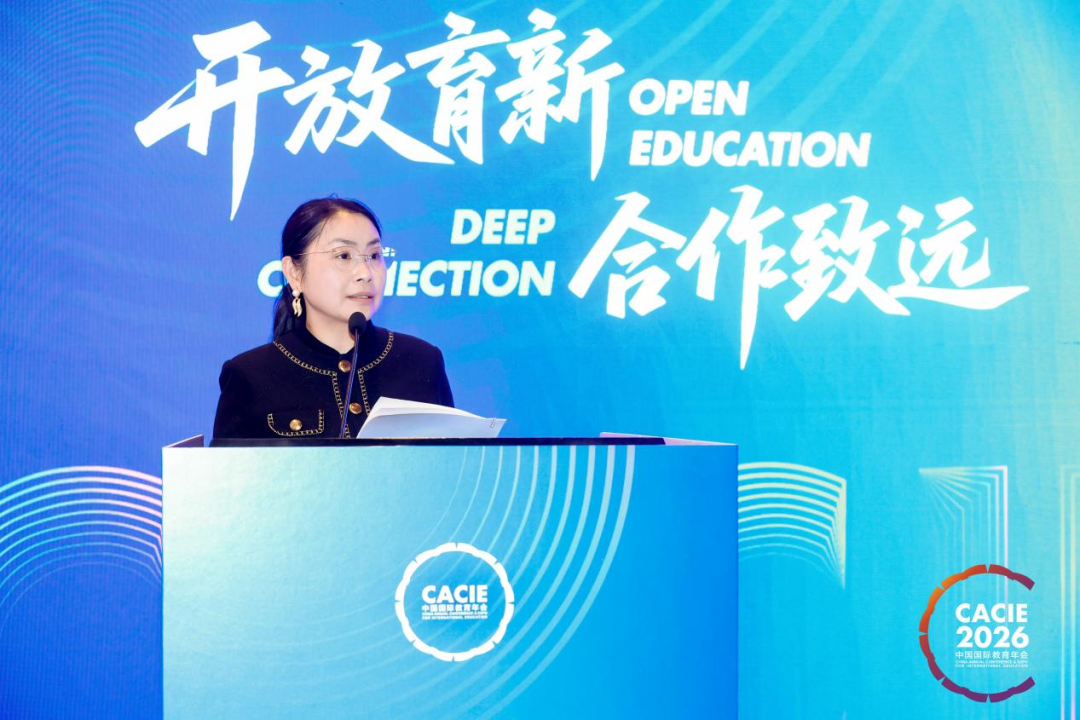
During the outcomes release session, Wu Yuxia and Zhang Yi presented the report on behalf of the research team. Wu Yuxia noted that the report covers 14 Central and Eastern European countries and provides a comprehensive review of regional innovation dynamics and bilateral cooperation models. She identified three notable trend shifts in China-CEEC innovation cooperation: a transition from general personnel exchanges toward institutionalized collaboration featuring joint funding and platform co-construction; a shift from single-project orientation toward ecosystem co-development integrating industrial, innovation, and talent chains; and a transformation of talent flows from traditional one-way mobility toward more flexible talent circulation.
Highlighting the report's core findings, Wu Yuxia noted that innovation development in Central and Eastern European countries exhibits an overall pattern of "unbalanced catch-up," necessitating differentiated cooperation mechanisms. Universities serve as critical pillars for institutionalizing innovation cooperation, and industry-university-research collaboration is deepening. A cooperation chain has taken shape, encompassing intergovernmental science and technology cooperation agreements, science and technology cooperation committees, joint funding programs, researcher exchanges, joint laboratories, and partner institutions. In fields such as green energy, advanced manufacturing, digital technology, life and health, and agricultural food, a collaborative model has emerged in which "enterprises pose the challenges, the government builds the platform, and universities provide the solutions." Looking ahead, the report proposes a four-point cooperation vision centered on "resilience," including improving communication mechanisms, strengthening talent support, focusing on frontier fields, and promoting the soft connectivity of rules and standards. Wu Yuxia also noted that the Research Center, as a hub platform for China-CEEC innovation cooperation supported by the Ministry of Science and Technology, regularly hosts signature events including the Think Tank Roundtable, the China Innovation Tour for CEECs, and Forum for Young Scientific and Technological Talents. It has also launched call for project proposals for the Second China-CEEC Youth Innovation and Entrepreneurship Competition and invited meeting participants to visit Ningbo for exchanges.
In the thematic seminar on "From Joint Research to Collaborative Innovation," Wang Bo articulated the respective responsibilities of government, universities, and enterprises. He argued that the government should provide "certainty" by acting as a rule-setter and mapping out cooperation roadmaps on a country-by-country basis; universities should demonstrate "possibility" by supplying knowledge, methods, and talent; and enterprises should deliver "feasibility" by providing application scenarios, funding, industrial chains, and engineering capabilities. He noted that China has engaged in extensive scientific research cooperation with Central and Eastern European countries, and that a joint fund for CEEC-oriented research, jointly established by the National Natural Science Foundation of China and the Ningbo Municipal People's Government, will be officially launched in 2027. Wang Bo recommended continuing to advance more open international cooperation policies, maintaining predictable investment in international scientific and technological cooperation, and placing greater emphasis on investing in people.
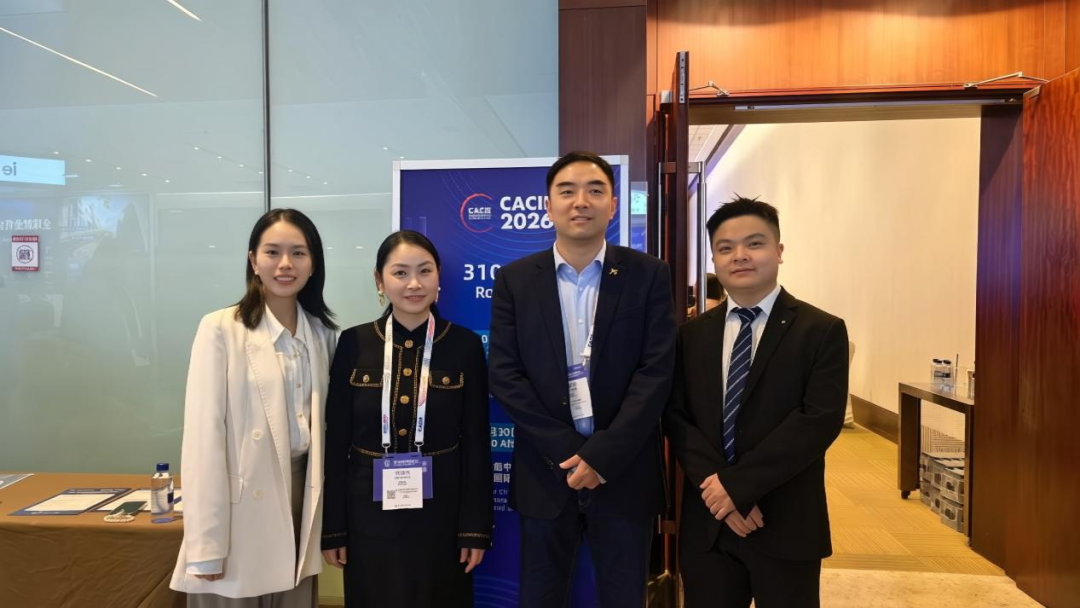
The release of the report and participation in the thematic seminar at the CCHEIC meeting represent a concrete effort by the Research Center to translate frontline practices in China-CEEC innovation cooperation into academic public goods and to serve the institutional development of university cooperation. Going forward, the Research Center will align with the "resilient cooperation" direction outlined in the report, strengthen engagement with CCHEIC member universities and disciplinary communities, and advance joint research, talent cultivation, and technology transfer, thereby providing research support for the institutionalized development of the Consortium and the upgrading of China-CEEC innovation cooperation.


