研究中心参加浙里区域国别沙龙并作专题发言
On November 25, 2026, at the Zhejiang Area Studies Salon, the symposium “Into Africa: Zhejiang’s Practice in China-Africa Joint Advancement of Modernization” was held at Zhejiang Normal University. Co-hosted by the Zhejiang Association of Area Studies and Zhejiang Normal University, the symposium was organized by the Zhejiang Provincial Think Tank Alliance for Area Studies and International Communication, the Institute of African Studies at Zhejiang Normal University, and the Division of African Area and Country Studies at Zhejiang Normal University, with support from the Institute for Central Asia Studies at Zhejiang University of Finance and Economics. Professor Zhang Xinguang, Director of the Center for Humanities and Social Sciences at Ningbo University of Technology, and Professor Wu Yuxia, Party Secretary of the China-CEEC Innovation Cooperation Research Center (hereinafter referred to as “the Research Center”), led a delegation to the symposium.
Wu delivered a thematic presentation titled “Exploring and Reflecting on S&T Think Tank Development toward Central and Eastern Europe” during the academic exchange session in the afternoon. In her presentation, Wu analyzed the challenges facing studies on Central and Eastern Europe, including wide differences among countries, strong external constraints, and limited access to information. She noted that general overviews alone cannot support practical cooperation and that the key lies in building comparable country-level knowledge, an actionable cooperation network, and sustainable institutional arrangements. She added that, focusing on these three areas, the Research Center has been developing country innovation profiles, initiating a think tank alliance, and promoting the establishment of a joint fund, so as to gradually translate country-level knowledge into cooperation capacity.
Turning to lessons learned and future plans, Wu observed that S&T and people-to-people exchanges are the foundation of think tank work, that cooperation networks must be sustained by mutual benefit, and that international communication relies on public knowledge products that can be cited by third parties. She also put forward the initial idea of “S&T diplomacy-oriented area studies,” noting that S&T diplomacy can itself become a research object, a methodological entry point, and a mechanism of knowledge production.
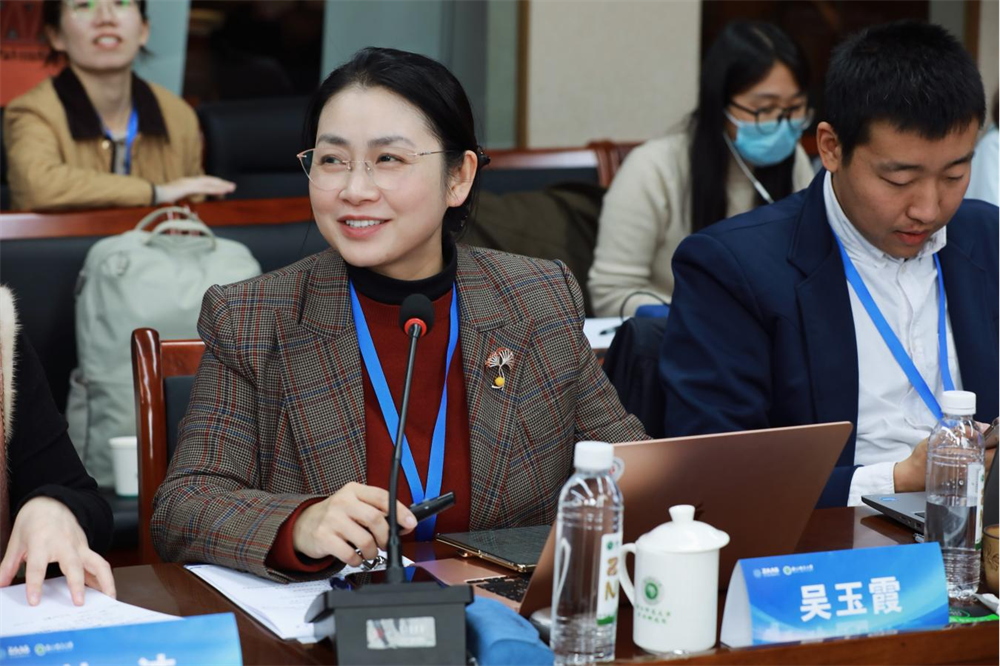
The presentation was a concentrated manifestation of the Research Center’s efforts to link its practical work in S&T think tank development toward Central and Eastern Europe with academic questions in area studies, as well as a demonstration of its distinctive feature of “supporting research with practice and feeding research back into practice.” The Research Center will continue to play its role as a think tank platform, deepen research on the mechanisms and knowledge production of China-CEEC innovation cooperation, and contribute to building an autonomous knowledge system for area studies and to high-standard opening up.
During the event, Zhang Xinguang reported to the Zhejiang Association of Area Studies on the university’s think tank development and exchanged views with the Office of Humanities and Social Sciences at Zhejiang Normal University on building social science think tanks.
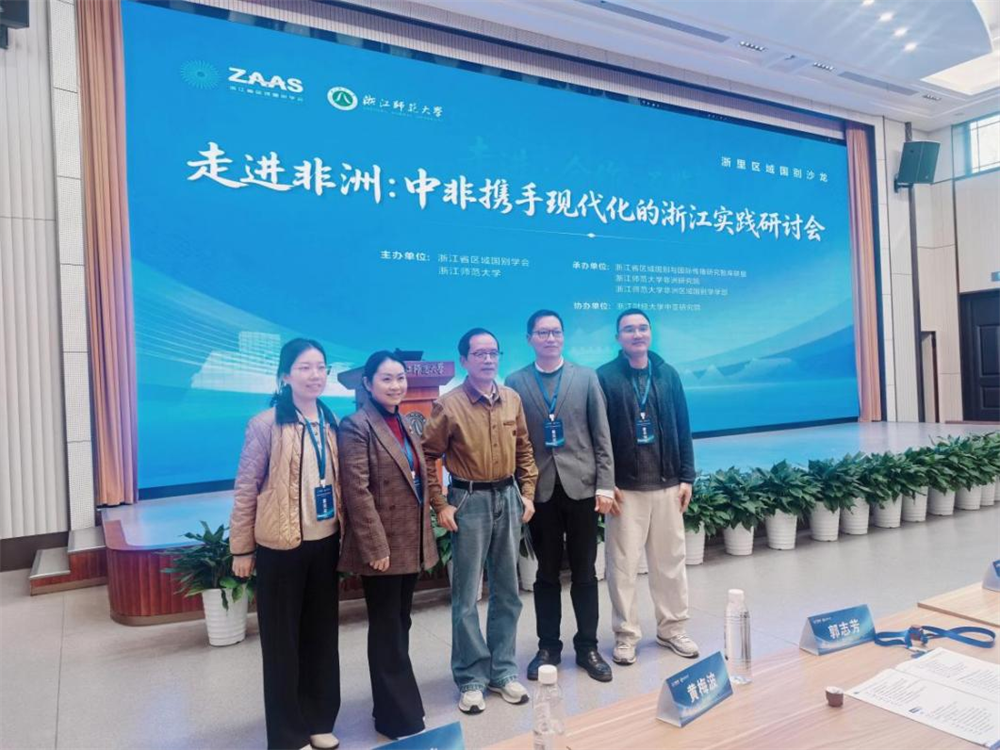
The Research Center delegation posing for a group photo with Professor Liu Hongwu, Dean of the Institute of African Studies at Zhejiang Normal University
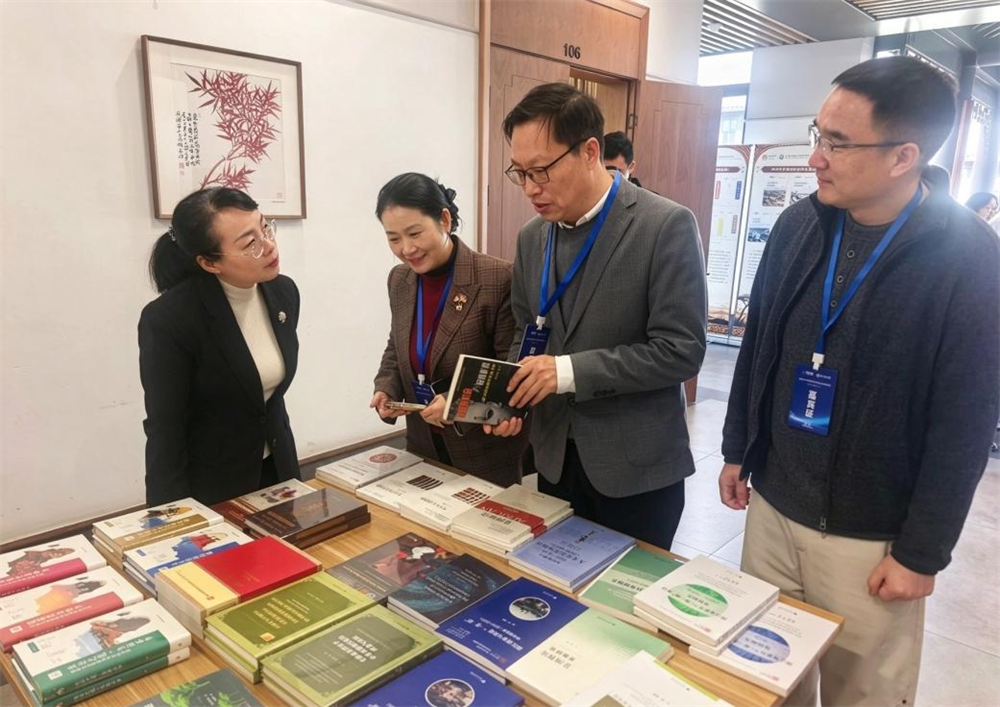
The Research Center delegation exchanging with Professor Wang Heng, Executive Dean of the Institute of African Studies at Zhejiang Normal University, on the publication of think tank monographs


